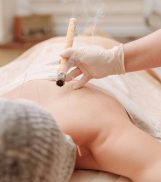

Introduction to Chinese Moxibustion
I am a researcher and practitioner of Chinese moxibustion technology and culture. Having been deeply engaged in the field of moxibustion for many years, I have always taken inheriting excellent traditional Chinese medicine as my responsibility, committed to spreading moxibustion technology and promoting moxibustion culture. I hope to make this treasure of Chinese culture go beyond tradition, get close to life, benefit more people in need of health care, and let the ancient wisdom of moxibustion escort the health of modern people.
Chinese moxibustion has a long history, dating back to primitive society. Our ancestors discovered that the warmth of fire could relieve pain, and gradually selected mugwort as the main material for moxibustion, initiating the embryonic form of moxibustion. By the Warring States Period, moxibustion had formed a systematic diagnosis and treatment system. Medical experts of successive dynasties have continuously enriched and developed moxibustion theory. From the systematic elaboration in the Huangdi Neijing (Yellow Emperor’s Internal Classic), to the invention of indirect moxibustion by Sun Simiao in the Tang Dynasty, and then to the popularization of moxa roll moxibustion in the Ming and Qing Dynasties, moxibustion has always been an important part of traditional Chinese medicine, guarding the reproduction and development of the Chinese nation.
The health-preserving effect of moxibustion meets the health needs of modern people. Its core lies in using mugwort as the medium and fire as the guide, regulating human body functions with the pure yang nature of mugwort and warm stimulation. It can warm and unblock meridians, dispel cold and dampness, relieving discomfort such as joint soreness and cold hands and feet caused by cold-damp stasis; it can warm and tonify qi, strengthen the body’s foundation, enhance the body’s immunity by stimulating acupoints such as Zusanli and Guanyuan, and improve sub-health conditions such as physical weakness, fatigue and frequent colds; it can also promote qi and blood circulation, harmonize zang-fu organs, assist in regulating problems such as spleen and stomach weakness, insomnia and dreaminess, which is consistent with the TCM concept of “preventing diseases before they occur”.
Inheriting moxibustion culture and practicing moxibustion technology is not only a respect for tradition, but also a guard for health. May this craft carrying thousands of years of wisdom enter more families and bring warmth and nourishment to everyone pursuing health.